
















































































































































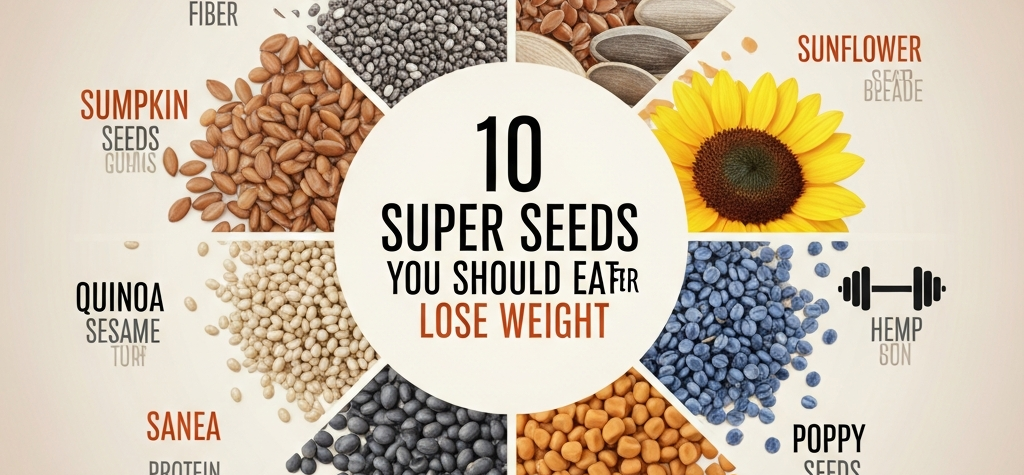
10 Seeds for Weight Management: Benefits, Portions, and How to Eat Them
Author: RVLNSV PRASAD
Updated On: September 2026
About Us
Author Bio
Editorial Policy
Contact Us
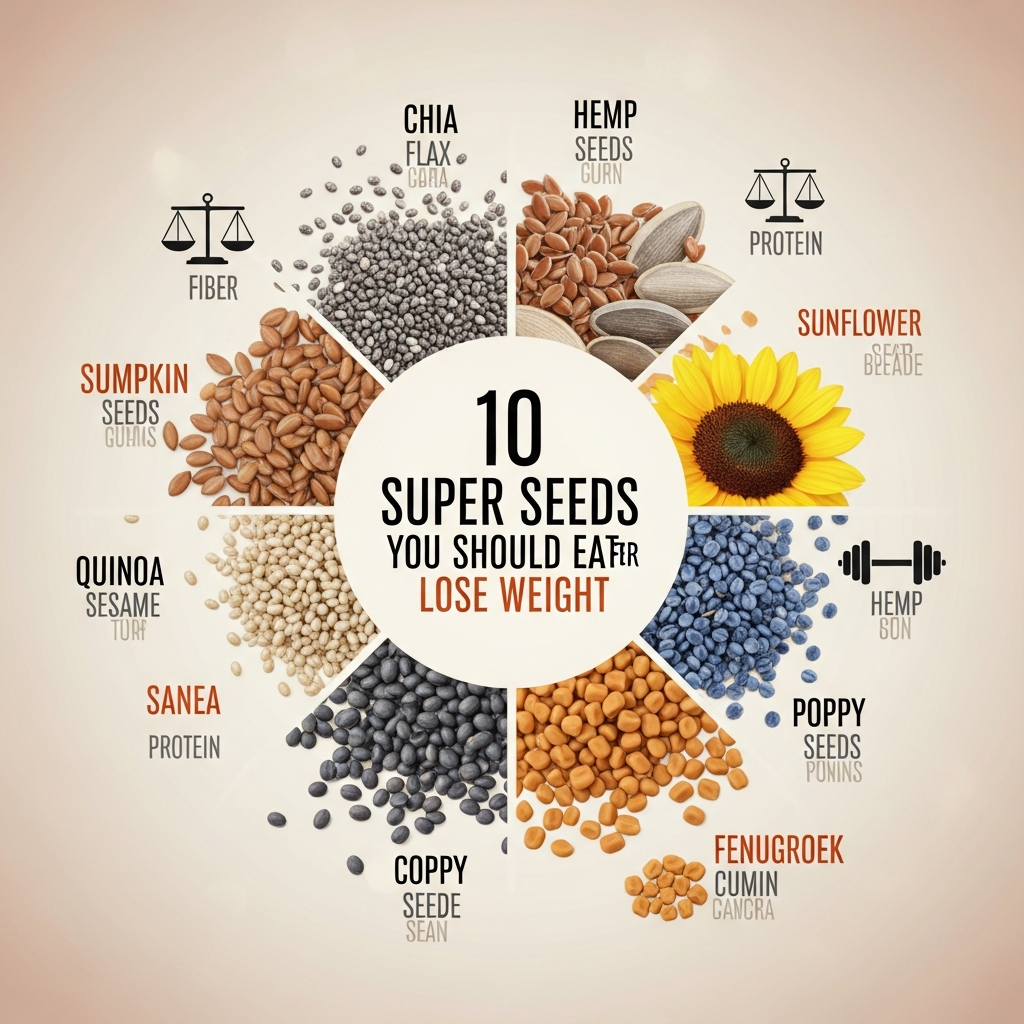
Introduction
If you are looking for seeds for weight management, the internet can make the choice seem surprisingly complicated. One article may recommend chia seeds, another may call flaxseed the best option, while others promise that pumpkin, sunflower, or basil seeds can somehow accelerate fat loss. The more lists you read, the harder it becomes to separate useful nutrition advice from exaggerated claims.
Seeds are worth considering, but not because they are magic weight-loss foods. They can provide dietary fiber, protein, unsaturated fats, and important micronutrients, depending on the variety. Those qualities can make a meal more nutritious and, for some people, more satisfying. At the same time, seeds are concentrated foods, so eating large portions can add considerable energy to the diet.
That creates a more practical question than simply asking which seed is “best”: How can you use seeds in a balanced diet without turning a healthy food into an unnecessary extra source of calories?
This guide takes that approach. It looks at 10 commonly eaten seeds, explains what each one contributes, separates established nutritional benefits from weaker weight-loss claims, and shows practical ways to use them. It also covers portion awareness, the difference between adding and replacing foods, preparation methods, and what current research actually tells us.
The aim is not to promise rapid weight loss. It is to help you make better everyday food decisions using evidence rather than marketing headlines.
Quick Answer: Can Seeds Help With Weight Management?
Yes, seeds can be part of a healthy weight-management diet, but they are not guaranteed weight-loss foods.
Chia, flax, pumpkin, sunflower, sesame, and other seeds can provide fiber, protein, unsaturated fats, and micronutrients. Fiber may contribute to fullness, while protein and fats can add nutritional value to meals. However, research on appetite and body weight does not show that every type of seed produces a meaningful or predictable weight-loss effect. Evidence also differs substantially between individual seeds.
Flaxseed has some of the more relevant clinical evidence. Several systematic reviews and meta-analyses have reported modest improvements in body weight, BMI, or waist circumference in studies involving flaxseed, although the results vary between trials and should not be interpreted as a guarantee for individuals. PubMed: flaxseed and anthropometric outcomes PubMed: 2024 systematic review of flaxseed
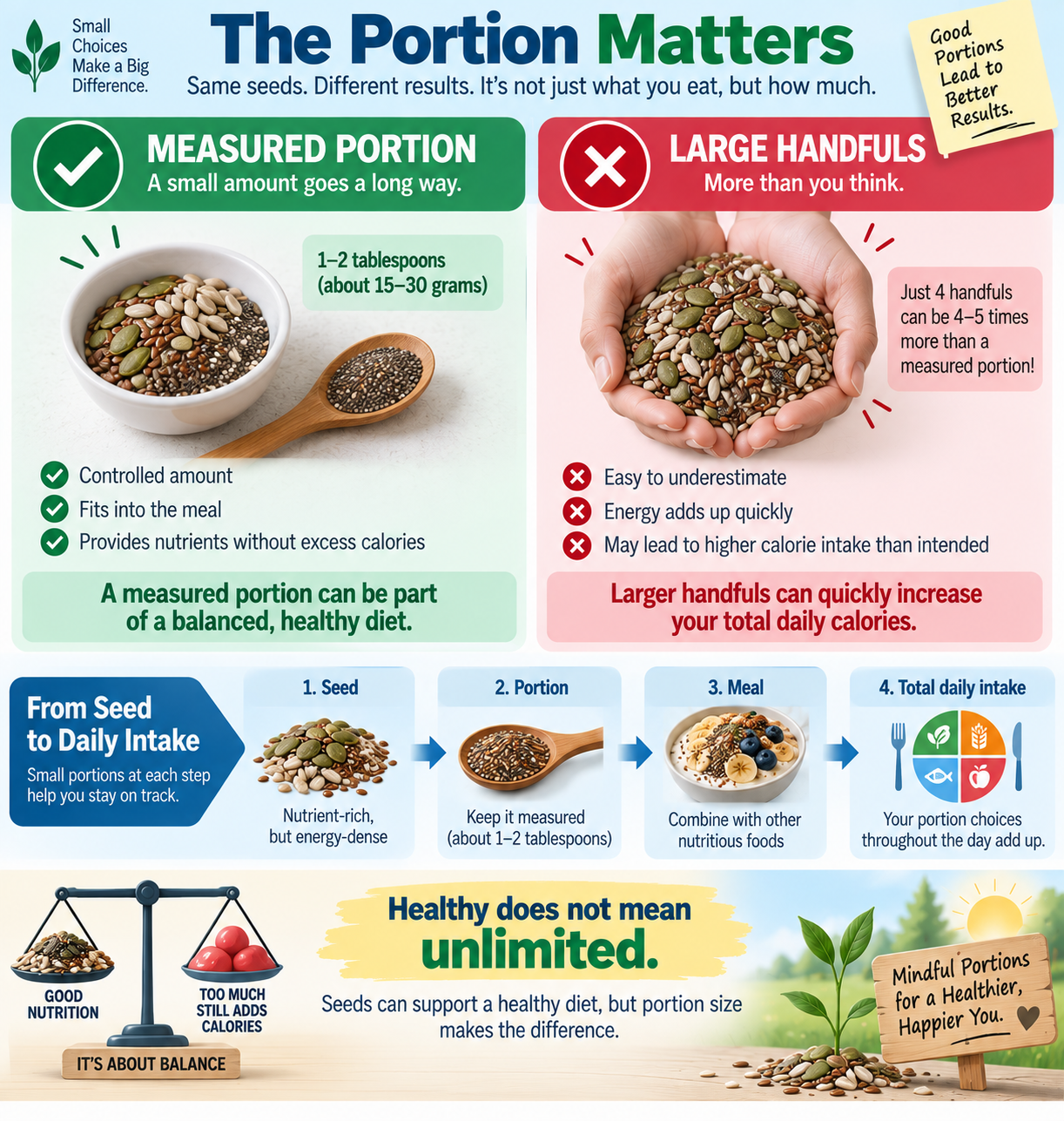
The practical issue is portion size. Seeds are nutrient-dense but can also be energy-dense. Adding several large servings throughout the day may increase total energy intake rather than helping with it.
So the better strategy is to use a measured amount of seeds within balanced meals, particularly when they replace a less nutritious ingredient or snack, rather than simply adding them to everything you already eat.
Key Takeaways
- Seeds can support a nutritious weight-management diet, but they do not independently cause fat loss.
- Chia and flax are particularly useful when you want to increase fiber intake.
- Pumpkin and hemp seeds can contribute plant protein along with fats and minerals.
- Seeds are nutritious but can also be calorie-dense, making portion awareness important.
- Replacing a less nutritious food with a measured seed serving can make more sense than simply adding seeds to everything you already eat.
- Evidence for direct weight-loss effects is stronger for some seeds, especially flaxseed, than for others.
- Your overall eating pattern matters considerably more than choosing one “perfect” seed.
Do Seeds Actually Help With Weight Management?
They can fit into a weight-management strategy, but that is different from saying that seeds directly cause weight loss.
Their potential usefulness comes from what they contribute to meals. Depending on the seed, you may get dietary fiber, protein, unsaturated fats, and micronutrients. These nutrients can make a meal more nutritionally substantial, and fiber can influence fullness in some circumstances.
However, the evidence does not support the idea that eating more fiber automatically means eating substantially less food. A systematic review of randomized controlled trials found that effects differed considerably between types of dietary fiber, with overall effects on energy intake and body weight being relatively modest. PubMed: dietary fibre, appetite, energy intake and body weight
That distinction matters.
Imagine someone eating a large breakfast and then sprinkling several tablespoons of seeds over it because they believe the seeds will “boost metabolism.” The meal may now contain more calories without necessarily becoming more satisfying.
Contrast that with someone using a measured amount of ground flaxseed in oatmeal while reducing a highly sweetened topping. The second approach makes more sense from a weight-management perspective because the seed has a defined role within the meal.
The seed is not doing all the work. The eating pattern is.
Why a Healthy Seed Can Still Work Against Your Goal
One of the most useful lessons about healthy seeds for weight loss is also one of the simplest:
Health does not mean unlimited.
Seeds contain fats, and dietary fats are energy-dense. That does not make the fats “bad.” It simply means portion size can matter when your goal involves managing total energy intake.
A common mistake is treating seeds differently from other calorie-containing foods.
Someone may carefully measure cooking oil but grab repeated handfuls of pumpkin or sunflower seeds while watching television. Another person may add chia to breakfast, flax to a smoothie, sesame to lunch, and a seed mixture to an afternoon snack without realizing that each addition contributes energy.
This is why the question “Are seeds too high in calories for weight loss?” deserves a nuanced answer.
They can absolutely fit a weight-management diet. The issue is not that seeds are unhealthy. The issue is whether the quantity and frequency fit your overall dietary needs.
A useful rule: measure first, then decide.
Instead of eating directly from a packet:
- Choose the seed.
- Measure a modest serving.
- Add it to a meal or snack.
- Eat normally.
- Notice whether it improves satisfaction.
- Adjust according to your overall diet.
This approach is more practical than searching endlessly for a seed that supposedly “burns the most fat.”
The Important Difference Between Adding and Replacing
This is one of the easiest concepts to overlook when using seeds for weight management.
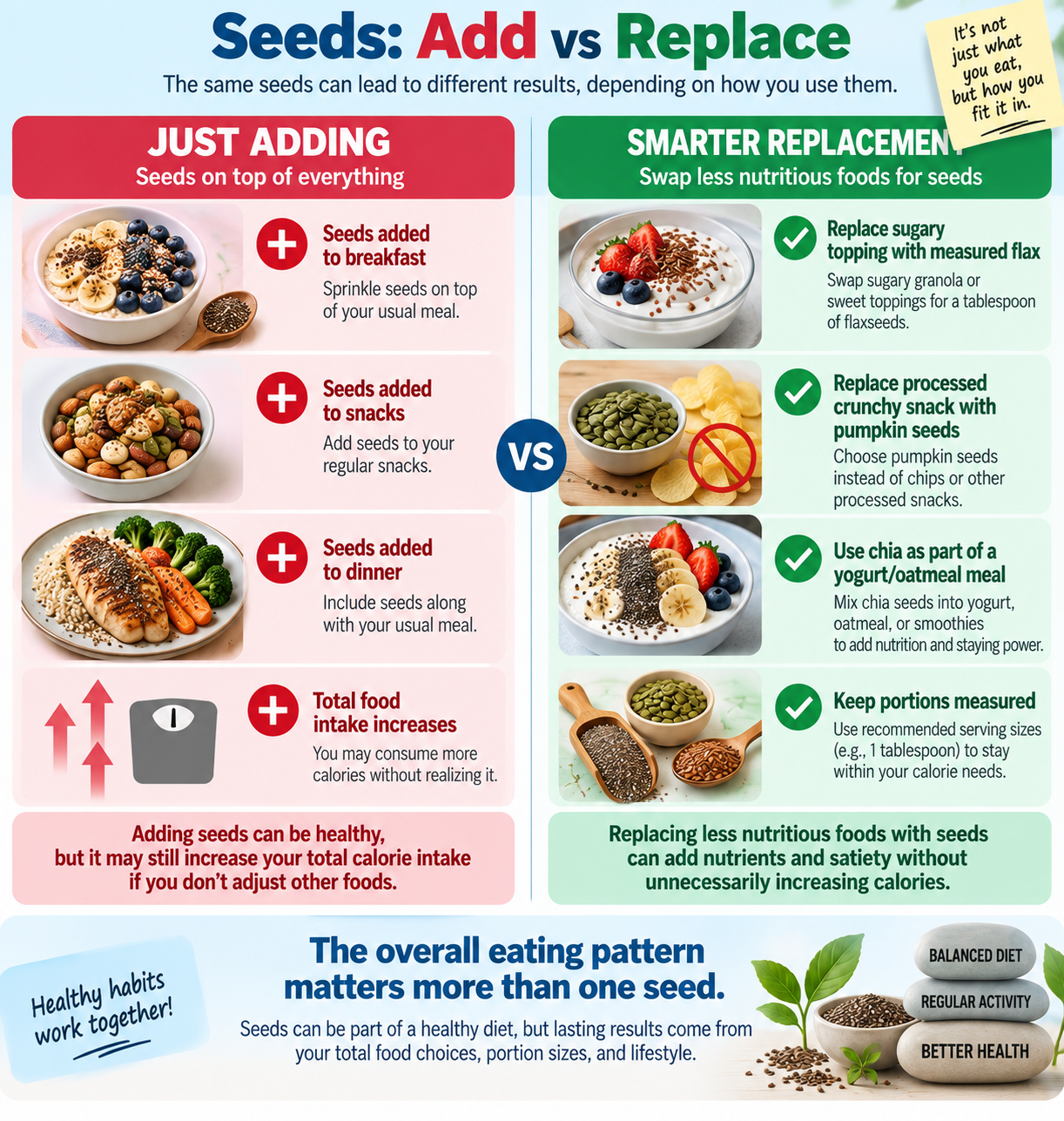
There is a difference between adding a food and replacing another food.
Suppose your yogurt normally contains a sugary topping. You could add chia on top while leaving everything else unchanged. Or you could use a measured amount of chia as part of a less-sugary topping.
Neither approach guarantees weight loss, but the second gives the seed a clearer nutritional role without automatically stacking additional ingredients onto the meal.
The same principle can apply to:
- pumpkin seeds instead of a highly processed crunchy snack
- ground flaxseed instead of a sugary topping on oats
- sesame as a measured garnish rather than an additional large portion
- a small seed-and-fruit snack instead of repeatedly grazing on packaged foods
The goal is not to make every meal “perfect.”
It is to make nutritious choices work within the meal rather than continuously expanding the meal.
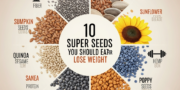
10 Seeds for Weight Management
There is no scientifically established ranking in which seed number one is guaranteed to produce more weight loss than seed number ten.
Instead, the following seeds are useful because they offer different nutritional characteristics and practical ways to improve meals.
1. Chia Seeds
Chia seeds are one of the most recognizable choices when people search for seeds to add to their diet for weight management.
Their main attraction is their fiber content and their ability to absorb liquid and develop a gel-like texture. That makes them particularly useful in foods such as yogurt, oats, and chia-based puddings.
Why chia may fit
The fiber can contribute to a meal’s overall satiety potential. However, it is important not to turn this into the claim that chia suppresses appetite in everyone.
Research on fiber and appetite is mixed. Different fibers behave differently in the digestive system, and human responses are not uniform. PubMed: systematic review of fiber and satiety
Practical use
Try a measured amount in:
- oatmeal
- plain yogurt
- overnight oats
- smoothies
- homemade puddings
If your normal diet is low in fiber, increasing chia suddenly may cause digestive discomfort. Increase fiber gradually and maintain adequate fluid intake.
Evidence perspective: Chia is nutritionally useful, but claims that it directly melts body fat are not justified.
2. Flaxseeds
Flaxseed deserves particular attention because there is more direct research on flaxseed supplementation and body measurements than there is for many other seeds.
A 2017 systematic review and meta-analysis of 45 randomized placebo-controlled trials found modest reductions in body weight, BMI, and waist circumference following flaxseed supplementation, although the studies varied considerably. PubMed: 45-trial flaxseed meta-analysis
More recently, a 2024 systematic review and meta-analysis covering 64 trials also reported reductions in body weight, BMI, and waist circumference, while showing substantial heterogeneity between studies. That variation is important: the findings do not mean every person eating flaxseed will experience meaningful weight loss. PubMed: 2024 flaxseed systematic review and meta-analysis
Whole or ground?
Ground flaxseed is often easier to incorporate into foods and is commonly used in nutrition research. It can be mixed into:
- oats
- yogurt
- vegetable dishes
- homemade breads
- smoothies
Store ground flaxseed appropriately because its fats can oxidize over time.
Evidence perspective: among the seeds discussed here, flax has relatively stronger direct evidence related to body weight, but it should still be viewed as an adjunct to a healthy dietary pattern, not a standalone treatment for obesity.
3. Pumpkin Seeds
Pumpkin seeds provide protein, unsaturated fats, and several minerals.
Their texture makes them particularly useful for people who want a crunchy component in meals without relying entirely on packaged snack foods.
A practical advantage
Pumpkin seeds can work well when portioned before eating.
Try them with:
- vegetable salads
- soups
- oats
- yogurt
- homemade snack mixes
Choose unsalted versions more often if you are already consuming plenty of sodium.
The important point is that pumpkin seeds do not need to “boost metabolism” to be useful. Their nutritional contribution is enough to make them worth considering.
Evidence perspective: strong nutritional value does not equal strong evidence for direct weight loss.
4. Sunflower Seeds
Sunflower seeds provide unsaturated fats, vitamin E, and other nutrients.
They can be particularly tempting to eat in large quantities because they are easy to snack on. That makes portion control especially relevant.
Instead of carrying an open packet and eating continuously, place a measured amount in a bowl.
They can also add texture to:
- salads
- vegetable dishes
- homemade trail mixes
- yogurt
- grain-based meals
The useful question is not “Will sunflower seeds burn fat?”
It is:
“Can I use a sensible portion of sunflower seeds in a way that improves my overall diet?”
For many people, that is a much more productive question.
5. Sesame Seeds
Sesame seeds are especially practical because they fit naturally into many cuisines.
They can contribute healthy fats, protein, and minerals and are also used to make tahini and traditional foods.
For Indian readers, sesame can be incorporated into:
- chutneys
- vegetable preparations
- homemade spice mixtures
- salads
- millet or grain dishes
Sesame-based foods can become energy-dense depending on preparation, so the same portion principle applies.
A seed does not stop being calorie-containing simply because it is mixed into a traditional recipe.
6. Hemp Seeds
Hemp seeds are useful when the goal is to add a concentrated plant-based source of protein and unsaturated fats.
They have a mild flavor and can be mixed into foods without dramatically changing their texture.
Consider them in:
- yogurt
- oats
- salads
- smoothies
- vegetable bowls
For people following vegetarian or plant-forward diets, hemp can be one component of a varied protein strategy.
Still, it should not be presented as a special metabolic accelerator.
Evidence perspective: the strongest reason to use hemp is its nutrient profile and versatility rather than established weight-loss effects.
7. Basil or Sabja Seeds
Basil seeds, often called sabja seeds in India, deserve attention because they are already familiar to many households.
They are commonly soaked before use and can be incorporated into beverages and other foods.
Their ability to absorb liquid gives them an interesting texture and makes them different from dry seeds used as toppings.
A sensible approach
Use them as one ingredient rather than turning a sweetened sabja drink into a supposed weight-loss remedy.
For example, a beverage containing large amounts of added sugar can undermine the nutritional purpose of adding a small amount of seed.
This illustrates an important principle:
The whole recipe matters more than the marketing label attached to one ingredient.
Evidence specifically demonstrating meaningful weight loss from basil seeds is much less established than the broader nutritional evidence for fiber-rich foods.
8. Watermelon Seeds
Watermelon seeds are sometimes overlooked, despite providing protein, fats, and minerals.
Roasted watermelon seeds can work as a snack or topping.
They can be useful in a varied diet, particularly when someone wants alternatives to heavily processed snack foods.
However, there is limited reason to present watermelon seeds as a clinically proven weight-loss food.
Their role is primarily nutritional and practical.
That distinction may sound less exciting than a “fat-burning seed” claim, but it is considerably more responsible.
9. Fenugreek Seeds
Fenugreek has a long history of culinary use, particularly in South Asian cooking.
The seeds contain fiber and various plant compounds, and fenugreek has also been studied in relation to metabolic outcomes.
However, traditional use should not automatically be interpreted as proof of a specific weight-loss effect.
If you use fenugreek seeds, think of them as part of food rather than as a substitute for treatment or a guaranteed appetite-control product.
They can be incorporated into appropriate recipes in small amounts according to taste and tolerance.
People taking medication for blood glucose or other conditions should discuss substantial dietary or supplemental changes with their healthcare professional.
10. Poppy Seeds
Poppy seeds are primarily known as a culinary ingredient rather than a weight-management intervention.
They provide fats, protein, and minerals and can contribute flavor and texture to meals.
They may be used in:
- curries
- sauces
- baked foods
- vegetable preparations
- traditional dishes
Their inclusion here illustrates an important point: a seed can be nutritious without having strong evidence that it independently reduces body weight.
That is a distinction readers should learn to make when evaluating online nutrition claims.
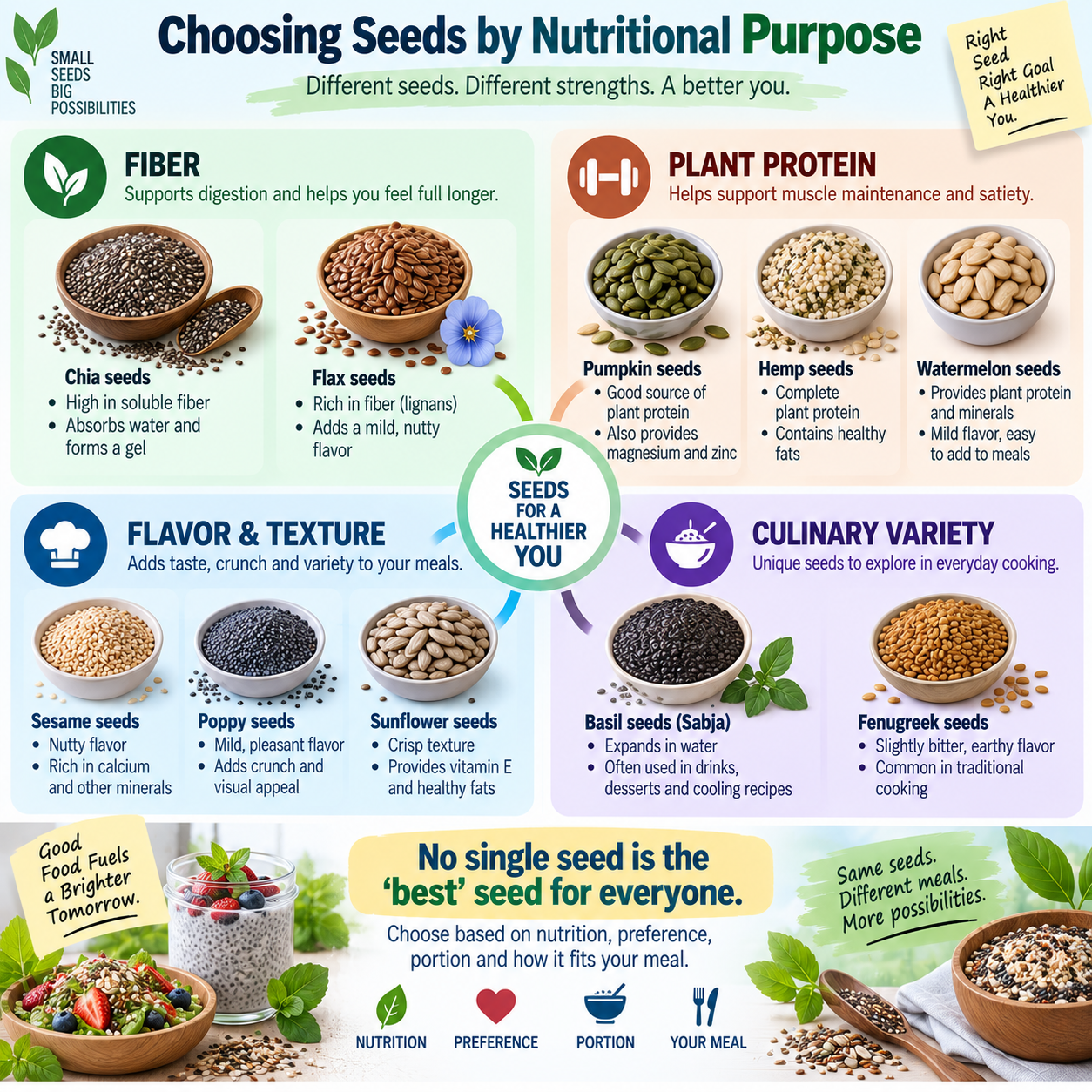
Which Seeds Are Most Useful for Different Eating Goals?
Rather than asking which seed is universally best, match the choice to what you want from your meal.
| Your goal | Seed to consider | Why it may fit | Easy use |
|---|---|---|---|
| Increase fiber. | Chia | High-fiber addition | Oats or yogurt |
| Add ground fiber and plant compounds. | Flax | Versatile and well-studied | Ground into oats |
| Add plant protein and crunch. | Pumpkin | Protein plus minerals | Salad or snack |
| Add vitamin E and texture. | Sunflower | Nutrient-rich topping | Salad |
| Add flavor to traditional meals. | Sesame | Culinary versatility | Chutney or vegetables |
| Add plant protein. | Hemp | Convenient protein source | Yogurt or oats |
| Add soaked texture. | Sabja | Useful in suitable recipes | Beverage or dessert |
| Add variety. | Watermelon | Protein and minerals | Roasted snack |
| Use a traditional ingredient. | Fenugreek | Culinary and fiber contribution | Cooked dishes |
| Add flavor and texture. | Poppy | Culinary versatility | Sauces or dishes |
The table is a guide, not a ranking.
How Many Seeds Should You Eat for Weight Management?
There is no universal number that every adult needs to follow.
A practical starting point for many people is a small, measured serving, often around a tablespoon depending on the seed and the rest of the meal.
The important part is not memorizing one perfect number.
It is understanding the relationship between:
portion → total meal → total daily intake
If you add a tablespoon of flax to breakfast, a tablespoon of chia to a snack, a handful of pumpkin seeds later, and another seed mixture at dinner, those portions accumulate.
People often focus intensely on the nutritional quality of individual foods while overlooking the total amount they consume.
If you are new to high-fiber foods
Increase your intake gradually.
A sudden jump in fiber can lead to:
- bloating
- gas
- abdominal discomfort
- changes in bowel habits
Individual tolerance differs.
The Most Useful Trick: Replace, Don’t Just Add
If you remember only one practical idea from this article, make it this one.
Use seeds to improve a meal rather than automatically making the meal bigger.
For example:
| Instead of | Consider | Practical reason |
|---|---|---|
| Sugary breakfast topping | Measured ground flax | Adds fiber and plant nutrients |
| Highly processed crunchy snack | Portion-controlled pumpkin seeds | Provides protein and unsaturated fats |
| Sweet topping on yogurt | Chia with fruit | Adds texture and fiber |
| Large packaged snack | Measured seed-and-fruit combination | Encourages more deliberate portions |
These substitutions do not guarantee weight loss.
Their value is that they can help improve food quality without requiring complicated dieting.
Easy Ways to Add Seeds to a Healthy Diet
You do not need elaborate recipes.
Breakfast
Add ground flax or chia to:
- oatmeal
- yogurt
- overnight oats
- whole-grain cereal
Lunch
Use sesame or pumpkin seeds over:
- salads
- cooked vegetables
- grain bowls
- soups
Snacks
Measure pumpkin, sunflower, or watermelon seeds into a small bowl rather than eating directly from the packet.
Indian meals
Sesame and fenugreek can be incorporated into appropriate traditional preparations.
Sabja can also be used in suitable beverages, but pay attention to added sugar.
This is where a balanced diet becomes more realistic: you are not creating an entirely separate “weight-loss menu.” You are making small adjustments to foods you already eat.
Common Mistakes People Make With Seeds
1. Assuming healthy means unlimited
Seeds still contribute energy.
2. Eating directly from the packet
This makes it harder to recognize how much you have consumed.
3. Adding several seeds to every meal
Variety is useful, but more is not automatically better.
4. Buying heavily salted or sweetened mixes
Check the ingredient list and nutrition label.
5. Increasing fiber too quickly
Your digestive system may need time to adapt.
6. Treating seeds as fat burners
There is no good reason to describe ordinary seeds as magic fat-burning foods.
7. Replacing balanced meals with seeds
A spoonful of seeds is not automatically a complete meal.
8. Ignoring the rest of the diet
A few nutritious ingredients cannot compensate for an eating pattern that consistently works against your goals.
Can Seeds Replace a Meal?
Usually, a handful of seeds alone is not a balanced substitute for a complete meal.
A satisfying meal can include a combination of:
- protein
- fiber-rich carbohydrate sources
- vegetables or fruit
- healthy fats
- adequate fluids
Seeds can contribute to that combination, but they do not need to carry the entire nutritional burden.
For example, yogurt with fruit and a measured amount of chia or flax is nutritionally different from eating several tablespoons of seeds by themselves.
The first is a meal or snack built from complementary foods.
The second is primarily a concentrated seed serving.
Seeds, Supplements, or Whole Foods: What Makes More Sense?
Whole seeds are foods. Supplements and concentrated extracts are different.
That distinction matters because some online weight-management products combine seed powders, extracts, and other ingredients while presenting them as if they were equivalent to eating the whole food.
They are not necessarily interchangeable.
For ordinary dietary use, the simplest approach is usually to treat seeds as ingredients within meals rather than searching for concentrated products promising rapid fat loss.
If a supplement is being considered for a medical reason, discuss it with a qualified healthcare professional.
What the Research Actually Says About Seeds and Weight
This is where the conversation becomes more interesting.
The evidence is not simply “seeds work” or “seeds do nothing.”
For flaxseed, multiple systematic reviews have found statistically significant reductions in body weight or anthropometric measures in some groups. The 2024 review included 64 trials and reported reductions in body weight, BMI, and waist circumference but also found substantial heterogeneity across studies. Updated 2024 flaxseed meta-analysis on PubMed
That means the average result across studies should not be interpreted as a guaranteed personal outcome.
Fiber provides another useful lesson.
A systematic review published in 2026 examined 48 studies and found that higher cereal-fiber intake was associated with favorable satiety measures, but effects on actual subsequent energy intake were limited. 2026 systematic review of cereal fiber and satiety
Earlier systematic-review research similarly found that most acute fiber interventions did not significantly reduce appetite or food intake, emphasizing how dependent the outcome can be on the specific fiber and experimental design. PubMed: fiber, satiety, and food intake
This is exactly why responsible nutrition writing should avoid turning a plausible mechanism into a guaranteed result.
A Personal Perspective on Using Seeds
As a health-content writer, one lesson that stands out when reviewing nutrition advice is how quickly an ordinary food can become an exaggerated “weight-loss solution” online.
Seeds are a good example.
Their nutritional value is genuine. Chia, flax, pumpkin, and other seeds can make useful contributions to meals. Yet the most practical benefit may come from how they change the quality and structure of a person’s eating pattern, rather than from a special ability to burn body fat.
I also think the “replacement rather than addition” idea deserves more attention. Someone does not necessarily need five different seeds every day. A measured serving that makes breakfast more satisfying or replaces a less nutritious snack can be more useful than turning seeds into another item to consume compulsively.
That perspective is not a clinical result or a promise of weight loss. It is simply a practical way of thinking about nutrition: choose foods for the role they play in your whole diet, not because a headline calls them a superfood.
Frequently Asked Questions
What are the best seeds for weight management?
There is no single best seed for everyone. Chia and flax are useful options when increasing fiber is a priority, while pumpkin and hemp can contribute protein and healthy fats. The better choice depends on your overall diet, preferences, tolerance, and portion size.
Can chia seeds help you feel full?
They may contribute to a more filling meal because they provide fiber and absorb liquid, but the response is individual. Fiber research shows that effects on appetite vary considerably between different fiber types and study conditions. Evidence on dietary fiber and appetite from PubMed
Are flax seeds beneficial for a weight-loss diet?
Flaxseed can fit well into a weight-management diet. Several meta-analyses have reported modest improvements in body weight or waist measurements following flaxseed interventions. However, the evidence does not mean flaxseed alone will cause substantial weight loss. Flaxseed systematic review and meta-analysis
How many seeds should you eat for weight loss?
There is no universal amount appropriate for every person. A small, measured serving can be a practical starting point. Consider the calorie content of the seed, the rest of your meal, and your overall dietary needs rather than assuming that more will produce better results.
Are seeds too high in calories for weight loss?
No. Seeds can be included in a weight-management diet, but they are energy-dense. Large portions can add substantial calories. Measuring your serving is more useful than avoiding seeds entirely.
Can eating too many seeds interfere with weight management?
It can, particularly if large amounts are added on top of an already energy-dense diet. Seeds are nutritious, but nutrition and calorie balance are not mutually exclusive concepts.
Should flaxseed be ground?
Ground flaxseed is a convenient way to incorporate it into meals and is commonly used in nutrition research. It can be added to foods such as oats or yogurt. Store it appropriately to protect its quality.
Can seeds replace a meal?
Seeds alone generally do not provide the balance and variety of nutrients that a complete meal can provide. They work better as one component of a broader meal or snack.
Is it better to eat one seed or several?
Variety can be useful because different seeds provide different nutrients. However, eating many types at once is not necessary. A few seeds that fit your diet and preferences are enough.
Bottom Line
Seeds for weight management are best understood as useful ingredients rather than miracle weight-loss foods.
Chia, flax, pumpkin, sunflower, sesame, hemp, basil, watermelon, fenugreek, and poppy seeds can all have a place in a varied diet, but their roles are different. Flaxseed has comparatively stronger direct evidence for modest changes in body measurements, while for several other seeds the main evidence supports their nutritional value rather than a specific weight-loss effect. PubMed evidence on flaxseed and body composition
The most practical approach is simple:
Choose a seed you enjoy, use a sensible portion, place it inside a balanced meal, and pay attention to what it replaces or adds.
That approach is far more sustainable than searching for one ingredient capable of doing the work of an entire healthy eating pattern.
Medical Disclaimer
This article is intended for general educational and informational purposes and should not be considered individualized medical or nutritional advice.
People with diabetes, digestive disorders, food allergies, swallowing difficulties, pregnancy-related nutritional concerns, or other medical conditions should discuss significant dietary changes with an appropriately qualified healthcare professional. Anyone experiencing unexplained or persistent weight changes should also seek medical advice rather than relying on dietary changes alone.
Author Note
RVLNSV PRASAD—Independent Health Writer & Researcher
This article is written with a reader-first approach, emphasizing practical nutrition, evidence quality, and responsible interpretation of health research. Nutrition claims can easily become exaggerated online, so the goal is to distinguish established evidence from promising findings, traditional use and unsupported marketing claims.
The article should be updated when higher-quality evidence materially changes the current understanding of seeds, dietary fiber, or weight management.
Sources & Evidence
- PubMed — U.S. National Library of Medicine
- National Institutes of Health (NIH)
- Wiley Online Library
- Elsevier
Similar Content
- 10 Best Foods To Control Blood Sugar Levels
- Healthy Daily Habits for Stress Reduction: A Comprehensive Guide
- 8 Top Superfoods for a Balanced and Healthy Diet
- 14 Ways to Increase Protein Intake Daily Tips
- 15 High Protein Low Carb Foods
- Home
- Category Weight Loss